
Nutrition Services Home
Welcome Back from 4J Nutrition Services
Dear 4J Students and Families,
Welcome back! On behalf of the entire Eugene School District 4J Nutrition Services team, we are excited to welcome you to a new school year.
Our kitchens are ready, our teams can’t wait to see students, and we’ve been busy preparing new menus, new choices, and new ways to make school meals welcoming, nourishing, and sustainable.
What Families Should Know This Year
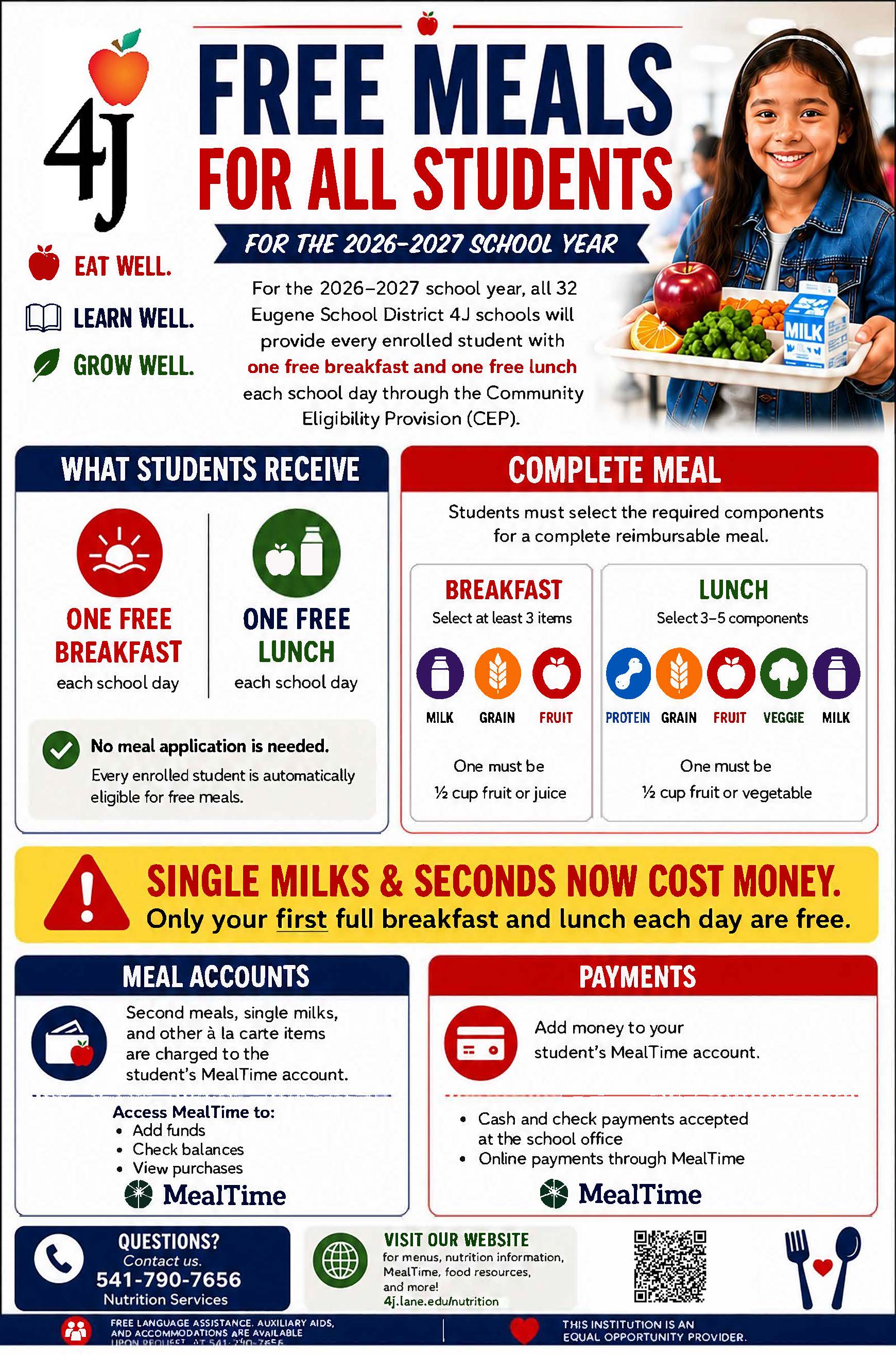
Breakfast and lunch continue to be available at no cost.
Through the Community Eligibility Provision (CEP), every 4J student may receive one complete breakfast and one complete lunch each school day at no cost, regardless of household income. One important change from last year: our meal program is no longer all-you-care-to-eat.
Seconds, extra milks, and other additional items are purchases and will be charged to the student’s meal account. We encourage families to talk with their students about the choices they would like them to make at school.
Meal Prices
| Grade | Breakfast | Lunch |
| Elementary | $3.00 | $4.25 |
| Middle | $3.25 | $4.50 |
| High | $3.50 | $4.75 |
| *Milk | $1.00 | $1.00 |
Students make their own meal choices.
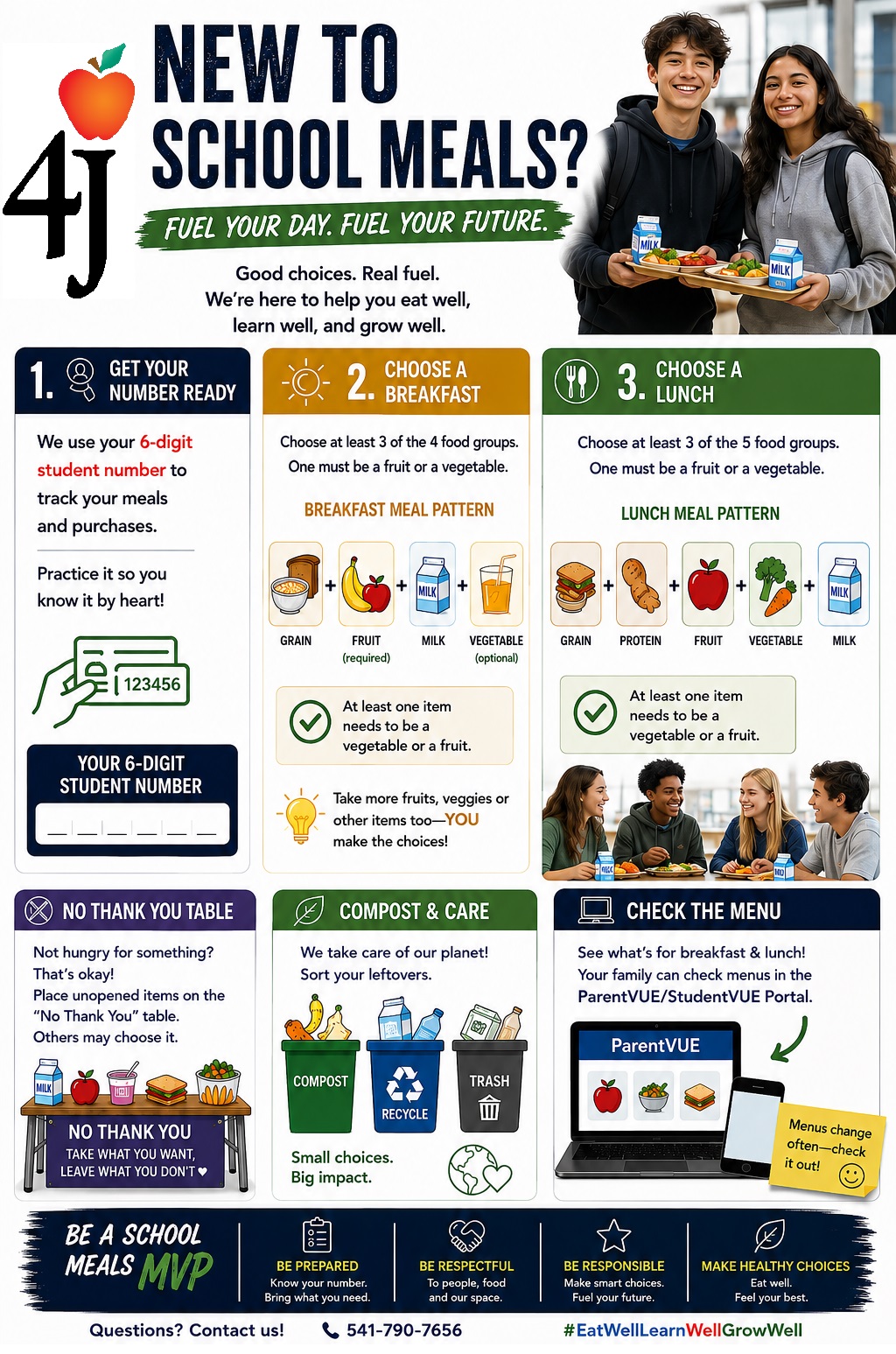
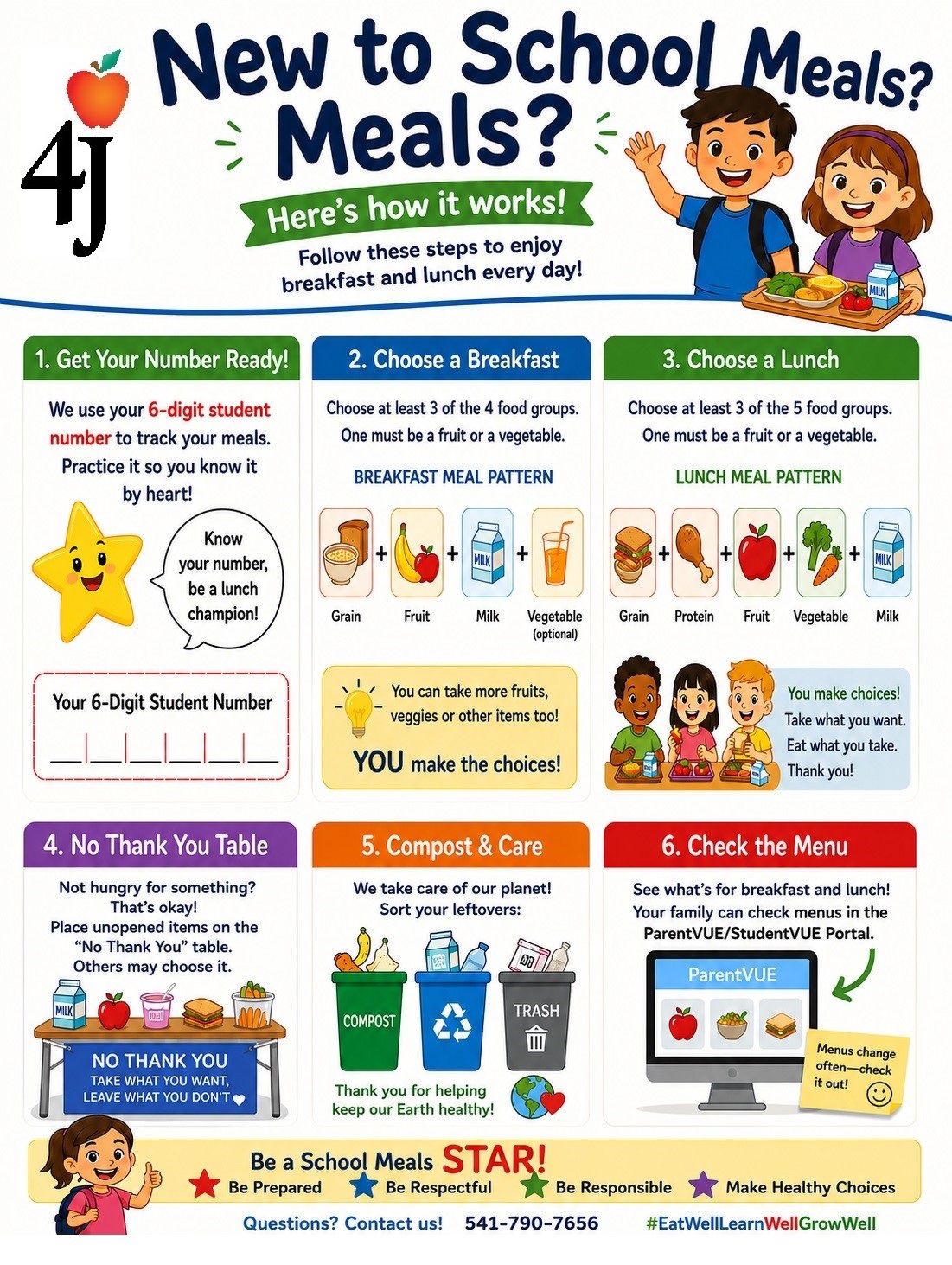
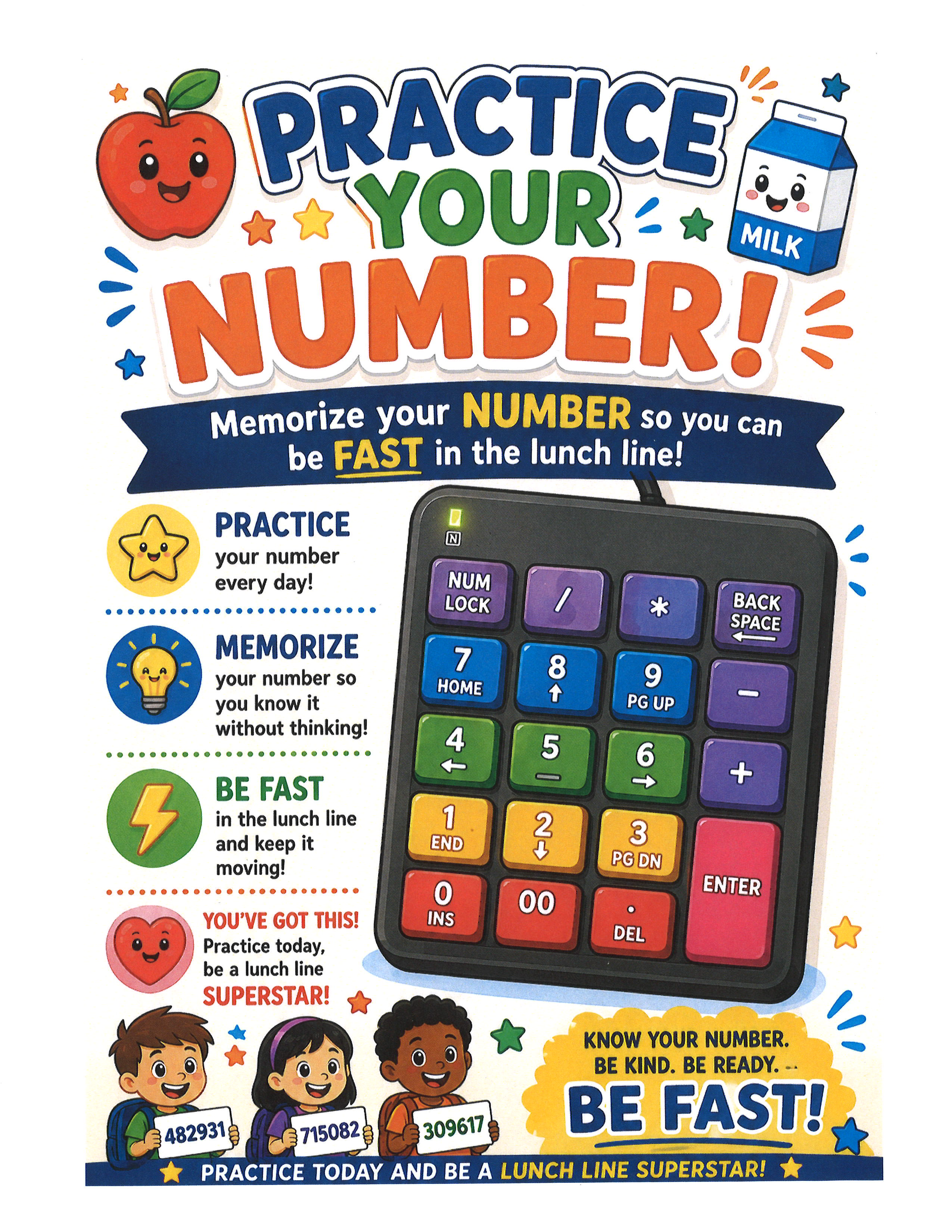
Our cafeterias are places for students to practice independence. Students choose from the foods available each day while our Nutrition Services staff help them build a complete school meal. Students use their six-digit student number at meal service, so practicing that number at home—especially with younger students—can help make mealtime easier and more confident.
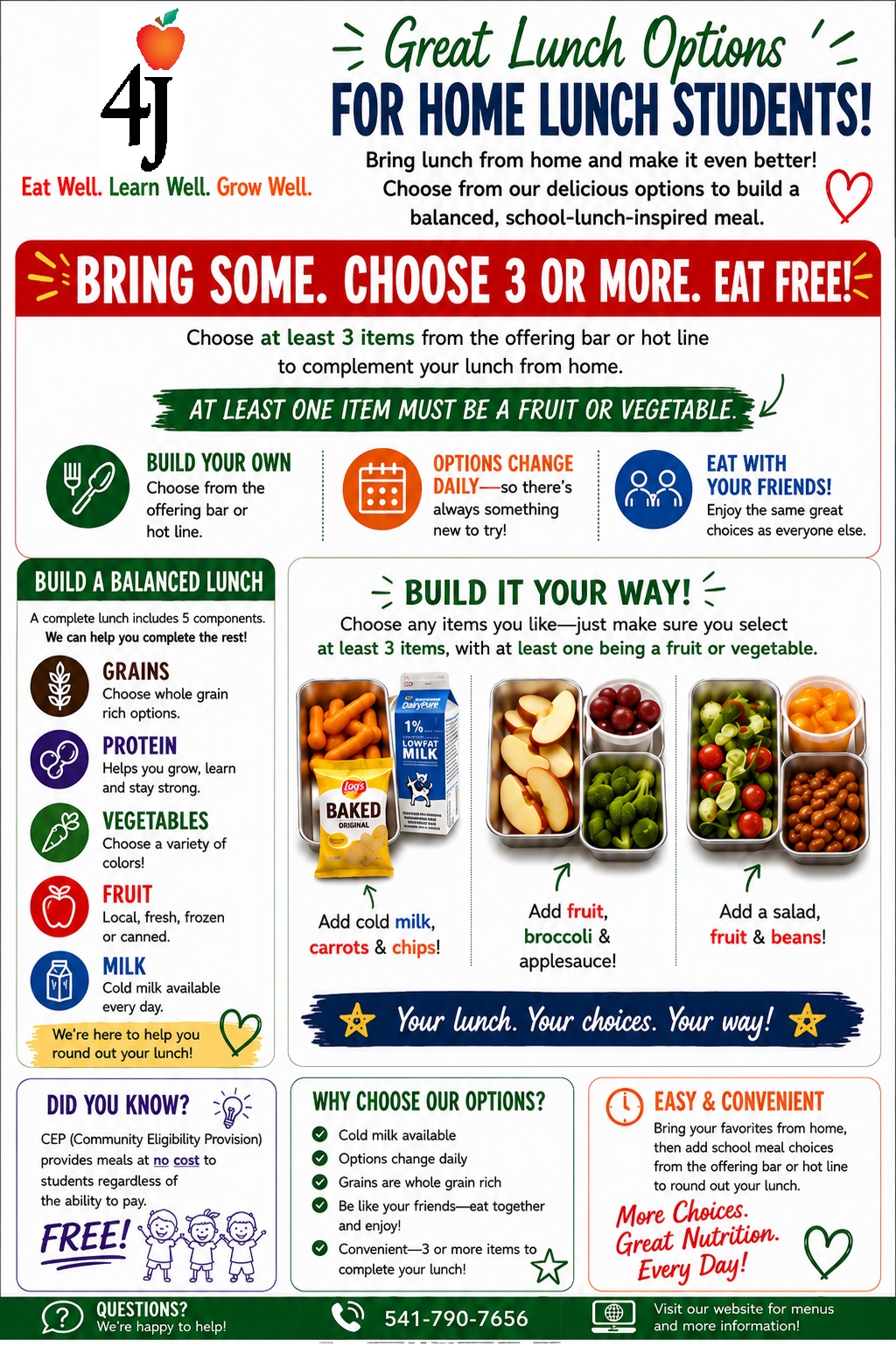
Students who bring lunch from home are welcome to participate too! They can choose foods from our daily offerings to help round out their home lunch at no cost when their selections meet school meal requirements.
New Menus, Familiar Favorites
Students will see new recipes and choices this year alongside familiar favorites. We continue to feature whole grain-rich foods, fruits and vegetables, and locally and Oregon-grown products whenever possible.
Families can check our online menus to see what’s being served and help students plan ahead for meals they’re excited to try.
Taking Care of Food—and Each Other
Our No Thank You Tables are back. If a student receives a whole or unopened food or beverage they don’t plan to eat, they may place it on the No Thank You Table for another student to enjoy.
It’s a simple idea with a big purpose: feeding students while reducing waste.
Students also continue to be important partners in composting and keeping food waste out of the landfill.
Taking the Next Step Toward Less Waste
We’re excited to take another big step this year with support from the Oregon Department of Environmental Quality (DEQ).
Our goal is to reduce—and wherever possible eliminate—single-use paper and plastic products in our meal programs by transitioning to durable, reusable serviceware.
This won’t happen overnight. But with thousands of meals served across 4J every school day, small changes add up. We want students to see that taking care of one another and taking care of our environment can be part of something as everyday as eating lunch.
We’re Glad You’re Here
School meals are about more than what is on the tray. The cafeteria is a place where students can make choices, try new foods, build independence, connect with others, and get the nourishment they need to learn and grow.
Whether your student eats with us every day, occasionally, or brings lunch from home, they are welcome at our table.
We invite families to explore our Nutrition Services website to learn more about menus, meal accounts, school meals, special dietary needs, No Thank You Tables, sustainability efforts, and more. If you have questions or need assistance, our Nutrition Services team is here to help.
Here’s to a great school year. We can’t wait to feed you!
Warmly,
Director Jill Cuadros & the 4J Nutrition Services Team
-
-
-
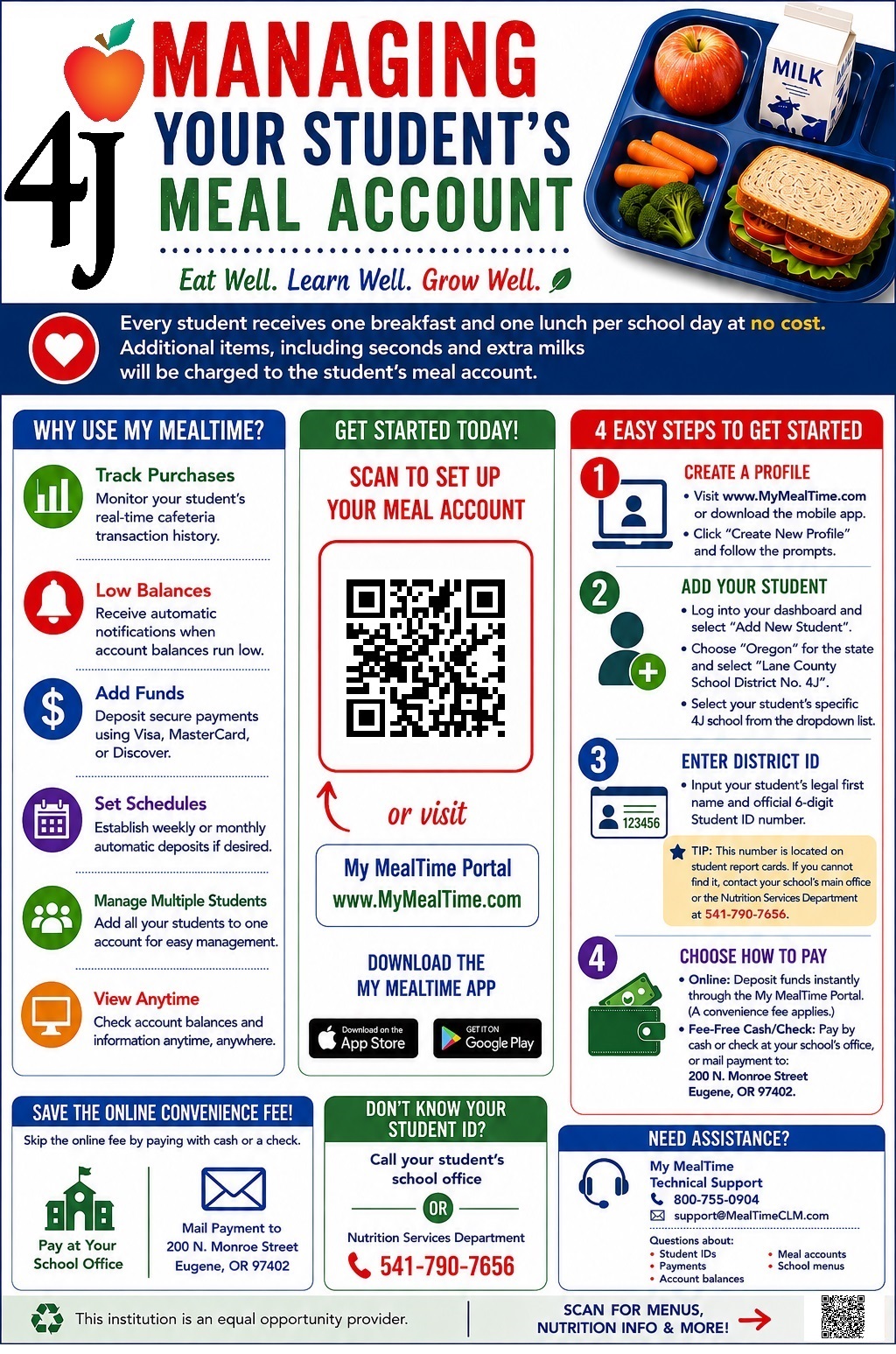 Ways to pay
• Pay by cash or check at your school office or 4J Nutrition Services Office—no convenience fee
• Pay online at Mealtime Online—convenience fee charged by software provider
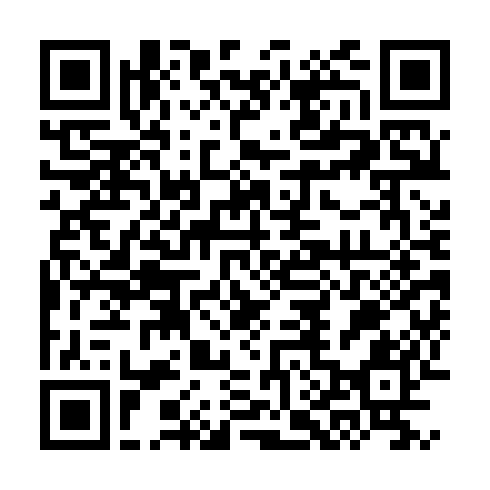
• Pay online via your mobile device using this QR Code

Our cafeterias use a program called Mealtime Online, which you can use to check your account, pay for meals, and more.
Online payment is an option offered for your convenience. If you choose to pay online, a convenience fee will be passed along to you from the credit card company. You may choose instead to drop off a check and pay for meals at the school office or Nutrition Services office. When you pay at the school by cash or check there is no convenience fee associated with payment.
Managing Student Meal Accounts
Providing students with access to nutritional meals helps them stay focused during the school day. In support of student learning, food service staff make available to all students breakfast and lunch meals in compliance with USDA nutritional guidelines.
A student will never be denied food; all students will be provided a meal regardless of account balance. The exception is for a la carte items, which must be paid for at the time of service.
Additionally, student meal account policies and procedures attempt to minimize identification of students with insufficient funds to pay for school meals. Students may ask for their balance at any time, however Nutrition Services staff will not provide a verbal reminder to students at the time of service when their meal account balance is getting low. If a meal account balance is negative, Nutrition Services staff use the auto-dialer system and mail reminders to notify families and provide guidance for paying the balance. Parents may check the status of their student’s meal account online anytime, or contact the district office for Nutrition Services.
For more information about 4J’s student meal account management, call Nutrition Services at 541-790-7656.
-
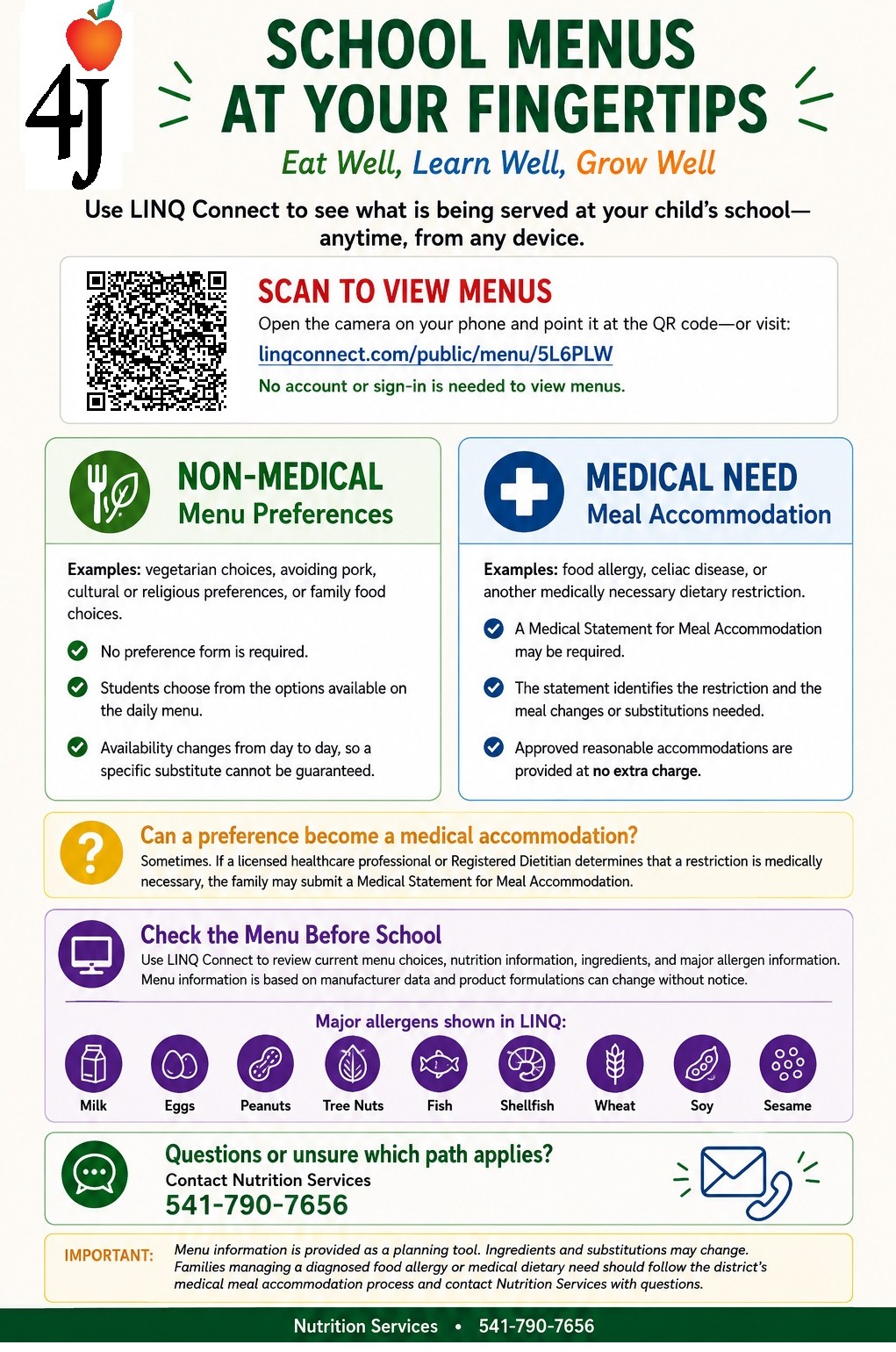
- Select your student’s school using the drop-down menu in the upper right corner.
- Use the arrows in the upper left corner to switch to the desired month, and just below that click on the desired meal (breakfast, lunch or snack/dinner). Dinner/Supper is the afterschool meal offered free at high schools.
- Click on the menu item to see nutrition information.
- You can print menus by clicking on the print icon in the right corner of the menu page.
Eugene School District 4J is an equal opportunity provider.
-
-
Medical Statement to Request Special Meals Accommodations – PDF
Declaracion medica para solicitar comidas adaptaciones especiales – PDF
Nutrition Services is pleased to offer conventional, made without gluten, and vegetarian options daily for all students; no additional documentation is required for these diet plans.
The National School Lunch Program (NSLP), School Breakfast Program (SBP), and other Child Nutrition Programs require participating school districts to provide meals that meet federal program requirements.
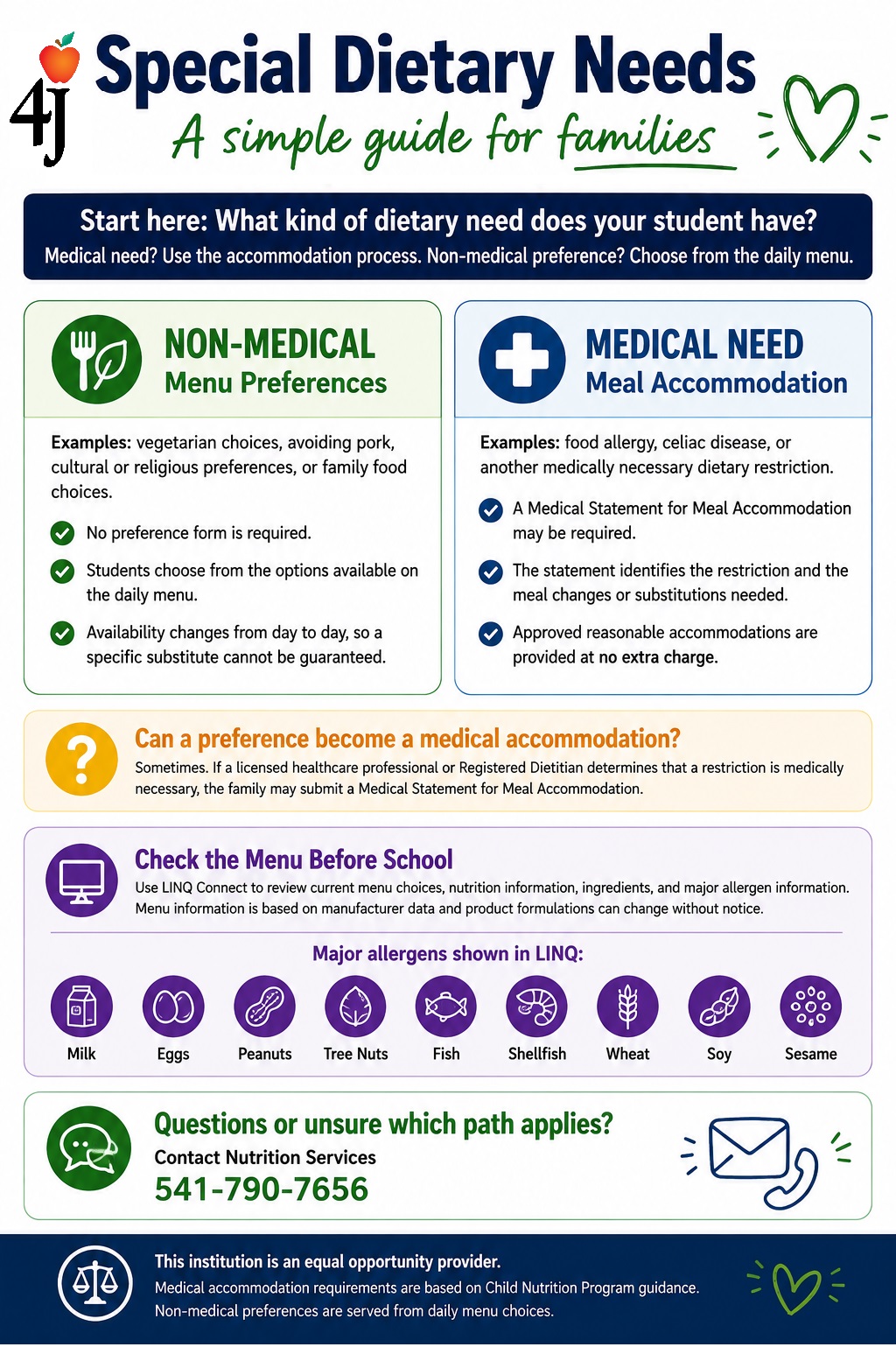 These requirements include making substitutions to the standard meal for students who are considered disabled and whose disability restricts their diet.
A school district may, at its discretion, make substitutions for individual participants who are not disabled persons but are unable to consume a food item because of medical or other special dietary needs (see “Participants With Medical or Other Special Dietary Needs”).
Generally, participants with food allergies or intolerances, or obese participants, are not considered disabled persons. Therefore, school districts are not required to make substitutions for these reasons. However, when a physician assesses that food allergies may result in severe, life-threatening reactions (anaphylactic reactions) or obesity is severe enough to substantially limit a major life activity, then the student may meet the definition of disabled person for meal substitutions.
-
-
Nutrition Service Department
nutrition@4j.lane.edu
Phone 541-790-7656
Fax 541-790-7650
Topic Phone Number General inquiries 541-790-7656 Menu and nutrition information 541-790-7656 Food purchasing and vendors 541-790-7637 If you need free language assistance and/or meal accommodations, please contact Nutrition Services directly at nutrition@4j.lane.edu or 541-790-7656

-
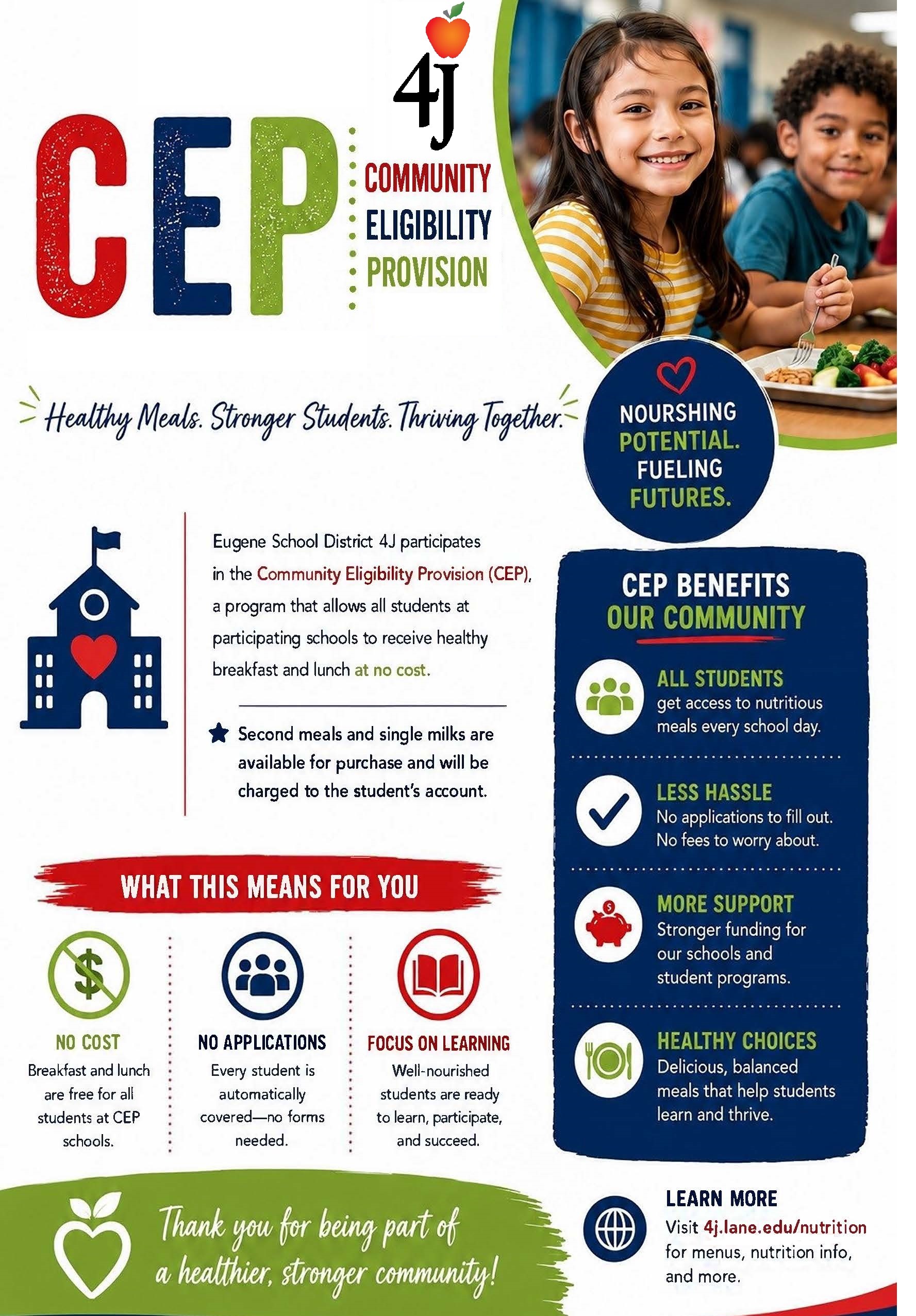 The Community Eligibility Provision, or CEP, is a federal meal service option that allows qualifying schools and districts to provide breakfast and lunch at no cost to all enrolled students without collecting household meal benefits applications.
Eugene School District 4J participates in CEP districtwide. Every enrolled student may receive one reimbursable breakfast and one reimbursable lunch at no cost each school day.
-
-
-
-

-
-
-
-
Staff Meal Account Request Form (PDF)
After you fill out the form and sign it, please forward to Nutrition Services for immediate processing.
Once we’ve set up your account you can make online deposits via My Mealtime (link below).
Nondiscrimination Statement
In accordance with federal civil rights law and U.S. Department of Agriculture (USDA) civil rights regulations and policies, this institution is prohibited from discriminating on the basis of race, color, national origin, sex (including gender identity and sexual orientation), disability, age, or reprisal or retaliation for prior civil rights activity.
Program information may be made available in languages other than English. Persons with disabilities who require alternative means of communication to obtain program information (e.g., Braille, large print, audiotape, American Sign Language), should contact the responsible state or local agency that administers the program or USDA’s TARGET Center at (202) 720-2600 (voice and TTY) or contact USDA through the Federal Relay Service at (800) 877-8339.
To file a program discrimination complaint, a Complainant should complete a USDA Program Discrimination Complaint Form which can be obtained online at: Filing a Program Complaint as a USDA Customer webpage, from any USDA office, by calling (866) 632-9992, or by writing a letter addressed to USDA. The letter must contain the complainant’s name, address, telephone number, and a written description of the alleged discriminatory action in sufficient detail to inform the Assistant Secretary for Civil Rights (ASCR) about the nature and date of an alleged civil rights violation. The completed AD-3027 Complaint form or letter must be submitted to USDA by:
- mail: U.S. Department of Agriculture Office of the Assistant Secretary for Civil Rights 1400 Independence Avenue, SW Washington, D.C. 20250-9410; or
- fax: (833) 256-1665 or (202) 690-7442; or
This institution is an equal opportunity provider
The National School Lunch Program (NSLP) is a federally assisted meal program operating in public and nonprofit private schools and residential child care institutions. It provides nutritionally balanced, low-cost or free lunches to children each school day. The program was established under the National School Lunch Act, signed by President Harry Truman in 1946.
De acuerdo con la ley federal de derechos civiles y las normas y políticas de derechos civiles del Departamento de Agricultura de los Estados Unidos (USDA), esta entidad está prohibida de discriminar por motivos de raza, color, origen nacional, sexo (incluyendo identidad de género y orientación sexual), discapacidad, edad, o represalia o retorsión por actividades previas de derechos civiles.
La información sobre el programa puede estar disponible en otros idiomas que no sean el inglés. Las personas con discapacidades que requieren medios alternos de comunicación para obtener la información del programa (por ejemplo, Braille, letra grande, cinta de audio, lenguaje de señas americano (ASL), etc.) deben comunicarse con la agencia local o estatal responsable de administrar el programa o con el Centro TARGET del USDA al (202) 720-2600 (voz y TTY) o comuníquese con el USDA a través del Servicio Federal de Retransmisión al (800) 877-8339.
Para presentar una queja por discriminación en el programa, el reclamante debe llenar un formulario AD-3027, formulario de queja por discriminación en el programa del USDA, el cual puede obtenerse en línea en: https://www.fns.usda.gov/sites/default/files/resource-files/usda-program-discrimination-complaint-form-spanish.pdf, de cualquier oficina de USDA, llamando al (866) 632-9992, o escribiendo una carta dirigida a USDA. La carta debe contener el nombre del demandante, la dirección, el número de teléfono y una descripción escrita de la acción discriminatoria alegada con suficiente detalle para informar al Subsecretario de Derechos Civiles (ASCR) sobre la naturaleza y fecha de una presunta violación de derechos civiles. El formulario AD-3027 completado o la carta debe presentarse a USDA por:
- correo: U.S. Department of Agriculture Office of the Assistant Secretary for Civil Rights 1400 Independence Avenue, SW Washington, D.C. 20250-9410; o
2. fax: (833)256-1665 o (202) 690-7442; o
3. correo electrónico: program.intake@usda.gov
Esta entidad es un proveedor que brinda igualdad de oportunidades.